Novel Study – Spirit Animals

The Dragon’s Eye – Book 8

Kia Ora Bloggers

I was reading this cool book Dragon’s Eye it is part Spirit Animals. The main characters is Conor he is trying to find out who betrayed him. He is my favourite character because brave and kind to his friends and the dragon.

We had to find the author and publisher, we had to write a prediction explaining what we thought the story would be about. We also had to describe the main character, recreate a scene by writing the dialogue as a script, retell the story and write a review.

I give this book 5 STARS – I think you should read this book because it is about a group of teenagers and a dragon, they have been capture and are trying to free themselves when they are moved to an island which is even worse and harder to escape from. So if you like book that have dragons, people facing challenges and overcoming them then read this book.

Read more

Cats are far Better than Dogs

Kia Ora Koutou

I disagree, read my story to find out what I really think.

We have been learning how to use Class Companion /Scribo to help us with our writing. We even try one of the skill builder it was the writing coach and we have to make the sentence better. I like the skill builder because …it was like playing a game and gave me points and feedback on my sentences.

Our Sentences with the Year 5s:


I strongly agree with having a dog, because dogs can protect you wherever you go. You can train your dog, you just have to take the time and it is easy to train your Dog to protect your family or protect other people that are in danger .

Your Dog can listen to commands that you say and it is easy for you to give your Dog food. Dogs can be loyal to you like helping your brother and sisters or mom and dad or your aunties and uncles or your cousins and people should like Dogs like me and dog can be naughty and other dog can be nice and kind or they can listen to you but I think you should like Dog but you can pick cats if you what. – Jayjay 

Read more

Career Pathway: Ismail

We are going to be talking about my career pathways after we explored KPMG. Mainly, I want to be a CEO because I met these guys who were working hard to be  CEOs of New Zealand. One of the questions I asked them was, “When did you start this business?” They expressed, “33 years ago.” That is one of the great questions I asked them. What I enjoyed after we went to see KPMG and when we explored, I said, “What are some great skills I need to improve in my career?” They answered, “Your writing and the way you persuade.” I said, “Make that a challenge to succeed and to make sure to never give up, even in the tightest times.” For lunch, we had some sushi rolls with chicken. It was halal, so I ate the stuff that I can only eat, which was a halal burger and, I also asked one good question to the chef who makes the food. I asked, “What is the best thing you have made?” He replied, “Sushi chicken roll.” When he was a kid, he used to make that all the time.

He also made that for us when he was cooking. Another question I was going to ask Jessie was, “If you had to choose between quitting your job and moving on to another job, what would it be?” For me, it would be to be a doctor, because you can help when people need your help. The person I asked the most questions was the chef, because I love the food he provided us.

One of the KPMG leaders said, “The main thing I actually need to improve on is my speeches because I am not good with speeches when I am focused on my work and not playing.” I do so much work that I do like more than 300 words, and the best question out of all the questions I asked was, “When did you start your job?” They said, “33 years ago,” because sometimes I ask bad questions that you do not want to know. We are going to be talking about a reason why I should go on another trip, why I should go on another school trip, and why I should, because I am doing the right thing and showing resilience when I am doing the right thing at the right time, and also if I were a young coach teaching at Edmund Hillary School at the young age of probably 20 years old. We are also looking at convincing Whaea Lorraine to make sure I am going to be good and doing the right thing at the right time. What I want to be when I grow up is a professional basketball coach because I learn something new every day at school. Playing basketball, I learn that they have rules, and those rules teach people to do the right thing at the right time, and it is also a running sport; you have to get the ball by running and playing properly with the rules the coaches tell you to follow. We are going to be talking about my career and what I want to be when I grow up. I want to be a professional basketball coach because it is a running sport, and I love running on my way to school, and you have to train a lot. What I need to improve on is my punctuation and my spelling. When you become a coach, you have to know the rules and make sure that you are watching the game at all times. Even if someone is talking to you, you have to make sure you focus.

Read more

Kiwican – Problem Solving – Hailey

Learning Intention: We are Learning to problem solve while showing resilience.

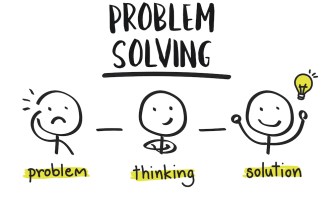
Malo e lelei today in kiwi can we had been learning about problem Solving and problem Solving means to “Find a way to Save the day!” after Kiwi Can asked us what Problem meant and problem means when something bad happens and solving means making the problem and situation better so problem solving means to find a solution for our problems or difficulties. In Kiwi can we also learned about the country Tonga one fun fact about Tonga is that its never been colonized before and that is because Tonga has a very strong monarchy.


Creative Problem Solving Process | InnovationTraining.org

In our kiwi can energizer we played a game called code breaker in code breaker our class had been split up into two teams in those two teams eachperson from the teams had a turn to guess what the code was we did that by stepping in a hula hoop and glaytor would tell us if we got it correct or wrong, after the energizer we went back to the mat to discuss how we used problem solving during our activities , We used problem solving by finding a solution for getting into the passcode we tried to remember what the right codes were before and we tried to guess what one we should got to next. We also used problem solving in our activitie by listening to the clues and each other’s opinion after these activities we did a GKQ.

This week we have been focusing on problem solving which means “finding a way to save the day?”

Read more

Kiwican: Week 6 – Brithany

Mālō e lelei!

Today’s KiwiCan our greeting came from all the way  from Tonga, it is divided into three or four primary group islands mainly named Tongatapu, Ha’apai, Vava’u, and the Niuas. They  are the best known as the ‘Friendly Islands’ being the only Pacific nation never fully colonized by a foreign power, and retaining the last indigenous monarchy in Polynesia.

Our topic was ‘problem-solving’ and the catchphrase was ‘Kiwi can says problem solving is finding a new way to save the day!’ What big or small thing is a problem to you? (from what I can remember) some of us said Maths, chores, etc; and honestly I do agree but only  sometimes. Our theme was resilience: coping with challenges and bouncing back. The value for resilience is rangatiratanga, and based on the ‘Treaty of Waitangi’ principles, its under participation.

KiwiCan was fun today from what I’ve seen, our energizer was called code breaker, it’s basically just like ‘Tic-tac-toe’ but you need to figure out the patterns and memorize which hoop someone or you went to-from 3 patterns to 6, it got hard for some of us. Our activity was called human wordle,  know the game Wordle? yes that, but one person knows the word and there are 4 participants saying any letter and trying to figure it out. For example: Kiwi / the participants – 1. B  2. I. 3. R. 4. D / after  that, we have to successfully say our letter one by one by yelling it out.

GKQ = it was soo competitive. Niah was the master, her category was ‘The Hunger Games’ and we we’re all surprised, and I mean surprised. A question comes? she immediately thinks first and  says the answer. It was so intense and fun at the same time!

Read more

Kiwi Can Letter – Edwina

Dear Kiwi Can,

You have meant a lot to me as you have taught me many things that I might have known already or other things I didn’t know. In my opinion Kiwi Can is a helpful team of leaders that show leadership and Manaakitanga with all their care for each student. With all kiwi cans help it made me more interested in finding out other countries and facts about it and also wanting to be more intriguing with my learning.

They have inspired me to learn new things and show resilience and Rangatiratanga through my actions, my emotions and my words. I would especially like to thank Glaytor and Here for being our Kiwi Can leaders showing us how to be leaders in different ways and situations even when we are struggling through stuff they still stick up for us and comfort us with all their care and with Glaytors jokes.

Kiwi Can has shown a lot of our school values especially Rangatiratanga and Manaakitanga, since they are our leaders I genuinely look up to and hope I become successfuly just like them and enjoy life and grow up just like them with the same values. Kiwi Can not only teaches us about countries and facts and also games they teach us about common sense and values in our school and in life. Kiwi Can made me believe in never backing out and never giving up like their famous phrase “cooping with challenges and bouncing back” basically meaning cooping with difficult challenges and getting back up when you want to give up and stop.

Kiwi Can has had alot of topics for us giving us one topic for each term, in term one our topic was positive relationships meaning having good relationships with each other and caring about each other.For term two our topic was integrity which meant being honest using your common sense and having very strong principles also doing the right thing when no one is looking.Our new topic for this term is resilience which means bouncing back and adapting quickly after facing a tough challenge.

Read more

Awesome Bloggers

Kia Orana

What do Awesome Bloggers Do?

We investigated a range of blogs from our own to blogs from Year 7 and 8 at Edmund Hillary School to those from other schools. We found a range of great bloggers out there!

Some of our favourite blogs were colourful, explained their learning and what they had been doing ot achieve their learning and were easy to read. In other words had punctuation to make their post clear to read.

What do you like in a post your are reading? Write a comment to let us know.

Read more

A Moment in Time with Whānau – Ismail

I am going to talk about moments with my family. First, I am going to talk about my mum.

When I was seven years old, my mum and I went to Butterfly Creek together. When I turned eight, I went to another country, Pakistan. When I came back, I was nine years old. When I returned to school, everyone started clapping for me, and I felt very shy.

I loved my old school, but I also like my new school. When I first started at Takanini School, I found it quite boring. When I came to Edmund Hillary School, it was okay at first, but then it felt boring because I had no friends. Later, I made lots of friends, and now Edmund Hillary School is cool.

Now I am going to talk about my family. My mum is my first protector because she has looked after me since I was born. Even now, at eleven years old, she still looks after me. That is why she is my first protector.

My dad is my second protector because he looks after me too. My dad loves me, even when he is mad. The best moment I had with my dad was when we went to Legoland and he bought me Lego. When I got home, I built the Lego. When I finished, I went to my dad and said, “Look, I finished the Lego you bought me.” He said, “Good job, Ismail.”

Now I am going to talk about my auntie. My auntie buys me things, even when she gets mad. She gives me things like lollies and drinks. I love my auntie. One of the best days with my auntie was when we went to the Sky Tower. We played tag, and she was pretty good at it. My other auntie is also very fast at running long distances.

Now I am going to talk about my uncle. He is the best uncle in the world because he looks after me. Even if he gets mad, he is still nice. The best moment with my uncle was when he took me to a park. It was not just any park. It was so big, even bigger than Papakura Park.

Now I am going to talk about my cousins. My cousins are always silly and try to act cool and strong, but they still love me. The best moment with my cousins was when they took me to the boxing ring and showed me how to box. I did not know how to box before, so it was one of the best experiences of my life.

The last time I saw my whole family was when my nana died. I saw my whole whānau at the cemetery. I saw my aunties, uncles, cousins, my mum’s friends, my mum, my dad, and my sister. My brothers were at my nana’s house playing games, so I only saw them once. That is my story about my whole family.

Read more

CLM Leadership – Edwina

On Thursday in CLM leadership course the year sevens including me we were learning to find out and dive deeper  for more information about leadership and what kind of leaders we are. two main and specific topics that we were told about were communication and types or kinds of leadership. Those two specific topics are both mind blowing and fascinating that it was chosen to be our new topic and that we have luckily been learning a lot towards those topics in learning and in some of our games or activities.

Before our tasks: In CLM leadership course before we got started on writings and other tasks we did a little warm up to  basically just get warmed up and ready. we were split up into two groups or teams of nine and had to use communication,collaboration,and obviously teamwork to work together. The warm up was that we had to make the shape that was told to us by using actions, body language and communication to work together on getting the shape right and communicating nicely and calm instead of shouting at each other.

The tasks: Straight after the warm up we were split again but this time into four groups of three or more people and we were given a task to do on paper. The task was that we had to discuss two topics one at a time, both topics are both great questions and fascinating to think of an answer for the question. our first question was “what does good communication look like” and a lot of people even people in our groups had great ideas and answers. Our second question was “How do you show good communication at break” which is also another great question with bizarre answers and many bizarre answers. Moving on to our other task which is a little bit more interesting to stop for a moment and think, The task was we had to stay in the groups we were in and we were given another paper actually two pieces of paper one was a a paper that had three different types of leaders, and the other was a little bit kind of like a timetable but different; it said where we had to write our name, what type of leader we think we are and why we think we are that leader. On the other paper there were three types of leaders: autocratic, democratic, and laissez-faire, and all three are different from each other, like an autocratic leader can be anyone, like a teacher telling a student to do work or a parent telling their child to do chores; it’s basically a leader who holds all the decisions. Meanwhile, the Democrat is known as a participative leader who includes team members in discussions and other kinds of stuff, kind of like games or anything, while they still guide and lead their group or team. On the other hand, the last type of leader, which some people hate, is the laissez-faire leader, who is basically someone who is too lazy to do anything and just lets people be, like if a teacher were lazy and the students asked what they’re doing for school work and the teacher just says to do anything and let them do it.

After all that writing and talking and communicating, we played a little game to burn some time off the clock. The game was that we had to work together to stay on a mat and try and fold it and then unfold it but make sure the mat was now flipped over without any of our feet or shoe parts touching the floor even a little bit, or we would have to start over. After many tries and fails and tries and fails until we got a little help or a little hint and got the hang of it practically finishing the game in success.

And that was all we did for the CLM leadership course for the year sevens. I’m grateful we take these courses and happy to learn new topics that’s all we did, and those were the topics chosen for this session  communication and types of leaders.

Read more

Order of Operations – Ruth

We are learning the rules for the order of operations.

I can use the order of operations rule to solve complex number problems.

If you want your calculator to divide 125 by 5 and the answer shown is 625, there is only one person to blame. A calculator always does what it is asked to do. So, if you press × instead of ÷, it won’t argue with you and ask you if you’re sure that’s what you want. It will multiply 125 × 5.

A calculator ALWAYS does what it has been told to do. However, what if the calculator has been programmed to calculate in a different way than you want it to work?

If you press 2000 + 12 × 2 =, the calculator might begin with 2000 + 12 and then multiply by 2, which equals 4024. A different calculator might multiply 12 x 2, which equals 24, and then add 2000, which equals 2024. It all depends on the way the calculator has been programmed.

G – Grouping

  • Anything that is grouped together in a bracket is calculated first. eg. 2 x (3- 1) = 2 x 2 = 4

E –  Exponents

  • Next comes exponents (and/or square roots)  eg. 4 x 4 × 32 = 4 × 9 = 36

M – Multiply and Divide

  • Then work from left to right doing division and/or multiplication. eg. 10 + 6 ÷ 2 = 10 + 3 = 13

A – Add and Subtract

  • Finally, work from left to right doing addition and/or subtraction. eg. 4 + 2 × 3 = 4 + 6 = 10

In independent practice, we had to use the rules of GEMA to solve the following problems without a calculator.

The first two questions were

1) a. 6 + 21 ÷ 3 = 10

to solve this question, you have to solve division first then the addition, according to GEMA. eg. 21 ÷ 3 = 4 + 6 = 0

b. 3 x 4 – 2 = 10

To solve this question, you have to solve the timetable first and then do the subtraction afterwards. e.g., 3 x 4 = 12 – 2 = 10

On Friday, we had a post-test on the order of operations, and I was honestly feeling a bit nervous about it beforehand. At first, I thought the questions were going to be much harder than they actually were. Whenever I hit a problem that I was struggling with, I grabbed a whiteboard to map out the steps and visualised the math. Taking that extra step to scratch out the work completely changed my confidence level. When I finally finished and saw my results, I was so excited to see that I got a perfect 100%, which was a much higher score than I ever expected to get!

The order of operations is a set of rules that dictates the sequence to follow when solving mathematical expressions with multiple operations. It ensures everyone evaluates equations the same way to arrive at the correct, consistent answer.

Have you learned about this before?

Read more

Decimal Fractions with a Difference

Learning Intention:
We are learning to read, write, compare and order decimals to thousandths.

Success Criteria:

  • I can understand and represent decimal fractions.
  • I can write and convert equivalent fractions, decimals and mixed numbers.

This week in maths, we explored how decimal fractions help us describe parts of a whole in a clear and useful way. We learned that fractions and decimals are closely connected; for example, 2/100 = 0.02, and we used place value blocks, place value charts, patterns, and number lines to show what these numbers look like. This helped us see that decimals are not just numbers on a page — they represent real amounts that we use in everyday life.

Our daily practice helped us build confidence with rounding decimal numbers to three decimal places. By working with numbers such as 50.284, we learned how to round to the nearest tenth, hundredth, and thousandth by checking the digit to the right. This strengthened our understanding of place value and showed us that rounding is a useful strategy for making sense of numbers in contexts such as money, sport, measurement, and the media.

We also zoomed in on thousandths, using examples such as 0.004, 0.023, and 0.07. Students represented these decimals with materials, matched them to fractions, and placed them on number lines to compare their size. Some students worked independently, some with teacher support, and others extended their thinking by solving extra challenges.

To connect our learning to the real world, we used the Get Your Share activity, which introduced us to New Zealand share prices written to three decimal places. This gave us a chance to compare and order decimals in an authentic context. A quick strategy we used was to line up the decimal points and compare each place value column from left to right: ones, tenths, hundredths, then thousandths. When working out the cost of 10 shares, we noticed that multiplying by 10 moves the decimal point one place to the right. For example, 0.019 × 10 = 0.19, so 10 shares would cost 19 cents. This helped us apply our learning in a practical and meaningful way.

Through these activities, we are becoming more confident at reading, writing, comparing, and ordering decimals to thousandths and at making connections between fractions, decimals, and real-life situations.

Read more

CLM Leadership – Leadership Styles – Hailey

On Thursday, the 11th of June, we had our second leadership course. Our focus for the lesson was good communication and what types of leaders we are.

First, my group and I discussed what good communication looks like.

We decided that good communication is when people speak kindly and encouragingly towards others during class and playtime. It is also important to show good communication towards everyone, anywhere, because a leader leads by example and inspires others to do the right thing.

Secondly, my group and I started to discuss what type of leaders we were individually.

I wrote down that I am a democratic leader, which means being someone who gets everyone’s opinions and ideas when it comes to group projects so that everyone can agree on something that benefits them in multiple ways. In my eyes, I am a democratic leader because I choose to listen to other people’s thoughts and ideas so that we can come up with a plan that has multiple solutions to fix everyone’s problems, since there are many different ideas and opinions.

Thirdly, I also thought I was an autocratic leader because most of the time I tend to take charge and construct a plan for everyone to follow. It’s not just about being bossy; it’s about having the initiative and integrity to take the lead and bring everything together. For example, a music conductor. Most people think a music conductor just waves a stick around in the air, but behind the scenes, a music conductor is one of the most important people in a large choir or band because they make sure everyone stays on key and follows the plan so everything runs smoothly without any problems along the way.

Lastly, for our activity, we had to work as a team using good communication and see if we really were the leaders we claimed to be. Our activity was a mat game where two teams each had a big blue mat. Everyone on the team had to stand on the mat, and if we could flip the mat over without getting off it, we would complete the challenge. At first, everyone came up with ideas, but each idea failed. We kept trying different methods and continued to fail. It wasn’t until near the end that our instructor gave us a clue. She told us all to squeeze into one corner, then she flipped one side over. From then on, we knew what to do. We all climbed onto the flipped side, turned the other side over, and completed the challenge. What type of leader are you? “You can be several different types of leaders.”

Top 5 Leadership Theories: A Guide to Leading Effectively


Read more

Kiwi Can – Pantaleon

Talofa Lava!

Two weeks ago in our KiwiCan session, it was full of laughter, joy and enthusiasm. Our topic was being a role model, and our theme was integrity. Our country for this session was Samoa, and we got to learn about so many interesting facts about this fascinating country, which surprisingly I am from!

As we entered the silent hall once again, mutters and chatter of conversations filled up the atmosphere as the KiwiCan leaders got ready for this amazing session. As we soothed down a bit, we sat down and got ready for this fun activity. Some of our responsible leaders (including me) had the opportunity to lead the Mili Mili, and if you don’t know what a Mili Mili is, it’s basically a traditional way by Polynesians to warm yourself up and to get ready for whatever you’re about to go through; this applies to rugby games, cultural performances and even just hyping up audiences. After the Mili Mili, the KiwiCan leaders then led us through the country of the week, which was Samoa! This fascinating country is where I am from and is also known as the heart of the Pacific! This country is known for its delicious meals and traditional yet impressive cultural dances.

Then we started to talk about our new topic, furthermore, which was being a role model. I have a question for you, though? What do you think is like being a role model, and why do you think that? Well, for me, being a role model is all about having respect for others even when no one else is looking, and I think this because throughout life we all have to face the challenges of other people not having that much respect for you and others around. I found this topic very reasonable because it is included in every single one of our school values and is whanaunatanga, rangatiratanga, manaakitanga, and kaitiakitanga. Wanaunatanga because it shows respect for whanau; rangatiratanga because it implies showing respect to the elderly and even people surrounded; manaakitanga because it equates to having equity for others; and lastly, kaitiakitanga because it says that we have to respect and care for the nature surrounding and sheltering us.

And our theme for this entire term was integrity; integrity is all about doing the right thing even when no one is looking. This important value is discussed throughout Polynesian history, because if you show integrity, it’s a strong perspective that you are obedient and trustworthy. This value helps coordinate future youngsters for other stages of life. Integrity isn’t just about doing the right thing, though; it can also have a form of honesty and safeguarding others. Inclusive integrity is a justified value that all residents of Polynesia & other continental races represent.

Our energiser for our KiwiCan was called ‘Ships and Sails’, while our activity was called ‘Down the Line’. We had to use integrity and be honest in these activities by helping other people if they weren’t sure of what to do and levelling up our reputation for future times. Then after those two amazing and energy-filling games, we played GKQ Master, and the questions were all connected to general knowledge. And in the end our GKQ master was ‘Shannah’ after answering this World Cup football question.

Inclusively, this session was full of energy and moral values that we all got to enjoy. Thank you for reading my blog, and I hope you have a great rest of your day.

Read more

BOOK REVIEW 2026 -Zepplin

Blogging Version

Written by Zepplin Corr. Produced by Zepplin Corr. Illustrated by Zepplin Corr. Directed by Zepplin Corr.

Monday, June 8th, 2026. It’s the day, the day when the book shall be praised or blamed.

THE BOOK

Kia ora and Dia duit! Welcome, unknown blog traveller, to the land of Zepplin’s blogs, and particularly this one, which you have either picked out of pure curiosity or stumbled upon. You probably already clicked off it before I even greeted you, but if you stayed, then ka pai. You’re more generous than 70% of the global population. Or maybe I’m just over-exaggerating, and I should silence myself from this unnecessarily long introduction.

Choice pending…

Choice picked!

You’re right. The second option it is.

For context, the book I could possibly be talking about is my favourite and most-viewed book, called T-Rex: Hunter or Scavenger? It was written by Dr Thomas R. Holtz Jr., aka The Expert, and illustrated by Michael Skrepnick.

This book was published at some point in 2003 as a children’s book, minus the little chunks of gore, but it’s all part of the cycle of prehistoric life, right? It explores the scientific debate over how the mighty dinosaur fed. Was it a hunter, an animal that survives by hunting fresh animals, or a scavenger, an animal that survives by eating the leftovers of already dead animals?

Yeah, well, the result is at the end of the book, I think. It should be, but I’m not going to tell you the outcome because I didn’t even finish the book anyway, so it doesn’t matter. Finish it before me and tell me the outcome. 🙂

MY REVIEW

Now, my main review is in Google Slides, so the long review will be linked here:

Original Book Review

But in short, what I was yapping about in the main review is that I praised the book for being really informative and visually appealing. I have loved dinosaurs since my early childhood, and it is like an automatic instinct for me to pick up something relating to dinosaurs.

Thomas R. Holtz, Jr.

The Expert – Thomas R. Holtz Jr.

Palaeoartist Michael Skrepnick has called Alberta home for the past 60 years. As a child, he was given the three-volume set of books “The World We Live In,” and was amazed by

Paleoartist of the book – Palaeoartist Michael Skrepnick has called Alberta home for the past 60 years. As a child, he was given the three-volume set of books The World We Live In and was amazed by them.

Product: Jurassic World: T.Rex: Hunter or Scavenger (Universal) - Book - School Essentials

The book cover

CONCLUSION

Anyway, that’s all for this blog. I hope you learnt something about this amazing book, and maybe you might even buy it and read it. But anyway, I’m going to wrap it up.

Thank you again for reading this medium-sized blog about a T-Rex book.

Haere rā,
Zepplin Corr


Read more

Moments With My Family – Peter

What I think makes a good family is that we have to look after my nana and do whatever she asks me to do. If she asks me to do something, then I do it for her. You always have to love your mum and dad, and your family too, because if you love them, then they will love you back, just like you love them.

I am going to talk about my family. On the weekends, we go out to collect fish and swim. What I love about my family is that they look after me and my cousins. We have so much fun, and I spend time with my mum and dad.

The best moment with my parents is when we go to church and learn about God.

What I love about my parents is that they tell me what not to do with other people and to do the right thing, even when no one is looking. What I enjoy about my brother and sister is that they love playing with me, and sometimes we go out to the park. Did you know that all of my family is Tongan?

What I think about my mum and dad is that they are very good people to other kids and adults. Did you know that I am the youngest in the family? My brother and sister are older than me. What I love about my mum and dad is that we spend more time together. What we do for fun is jump around and have lots of fun.

Did you know that on my birthday we went on a vacation to Australia to meet my first cousin on my dad’s side? On my mum’s side, the only people who know me are my cousin, her sister, and her brother. What I love about my family is that they always come to watch my Heartbeat games. After my rugby games, they come to support me, and sometimes they give me some money.

Did you know that I have two siblings? They are my sister and my brother. What I love most about my family is my mum and dad because they are my parents, and I love them. Thank you to my brother and sister for looking out for me. For my brother and sister’s birthdays, my sister just wants to go shopping, and my brother just wants to eat.

What I love about my cousins is that they always want to play rugby with me because they love rugby, just like me. My big cousin play-fights with me and Toutai, and we always run from him. What I love about him is that he is always nice to people. If people need help, he goes to help them. He is the nicest person I have ever looked up to. They are also some of my closest cousins in the world. My whole family lives together.

Whenever my family tells me to do something, even my nana and papa, I just do what they say because I try to be a good person to other people. Did you know that I love my family more than my friends because they are my family?

What my family likes to eat is Tongan food because they enjoy Tongan food. We like to eat whatever we want, but if we do not have a choice, then we just get pizza. Did you know that I have lots of cousins? Some of them live with me, and some of them live in another house.

These are some of the special moments that I have had with my family. – Peter

Read more

Angles with Scratch

Talofa Lava

We are learning to add angles to make 180 degrees. In Scratch the sprite (cat) moves along a straight line (180 degrees). We had to code the sprite to make a square, triangle and a circle. Then we had to learn how to add the code to make it say the shape name. We use the pen code to draw the shapes.

Have you used Scratch for Maths?

Read more

Rocket Challenge – Mission 2

Today was exciting the engineering came and helped us.

It took longer than expected to test the different volumes of water, but it didn’t help that one of our pumps wasn’t working and the other one need parts ot be tightened.

Read more

Integrity as a Means to be Honest

Kia ora Readers,

WALT understand and show what INTEGRITY is

During Kiwi Can, we learned about New Zealand and some fun facts about our own country and, more importantly, ANZAC Day. We learned that when the soldiers flew in to Gallipoli, they only saw the fields of red poppies. When some of the soldiers died, they died in the field of poppies, and therefore, they were the last thing they saw. Red poppies have become the symbol associated with ANZAC Day. The poppies to us are a symbol of respect, honour and, to some degree, peace.

Following this session, we learned about what integrity is. Integrity is working with others, doing the right thing even when no one else is looking. This means showing respect, being honest, taking responsibility and owning our behaviour and mistakes.

We know we are using integrity when we get rewarded, when you’re happy and safe, when your heart feels good, when you gain trust, when people compliment you and when you feel like it is right.

The activity we enjoyed was ‘3 Sport’. We had to make a position in a sport that was given to us. Our choices were karate, basketball and waka ama. Our caller had to turn and close his eyes, then call out a sport. If we were in the position of that sport, we were out. Many of us tried to win and use our strategies. At the end of game 1, Haji won! We were all really happy and clapped loudly.

After learning our catchphrase, we got to know a bit more about integrity and what that looks like. Here, our Kaihāpai also said, “Integrity is easier said than done. ” Integrity is important because it is when Whaea Lorraine tests us, and she hopes we have learned enough to do tasks without her. Sometimes we are successful and sometimes we are not.

Our feedback during Kiwi Can came from Ruth this week, which was, ‘We enjoyed learning about integrity and how to show it.’ As Room 9’s kaiako, I think they are coming to terms with what this looks like. I enjoy watching their struggles, but I also enjoy watching their successes in overcoming peer pressure more. Ngā mihi.

Read more

A Delicious Snack: Anzac Biscuits!

Kamusta Reader!

Room 9 and I have gotten the opportunity of making Anzac Biscuits. We are learning to follow baking instructions to that we could have an amazing outcome. It originated in World War 1, where it had been sent by wives and women groups to the soldiers. Originally termed “Soldiers’ Biscuits” or “Red Cross Biscuits,” they were renamed in honor of the Australian New Zealand Army Corps.

Therefore to make the biscuits, we would make it in plastic bags. Making pastries in plastic bags is a huge advantage considering that it wouldn’t develop a huge mess, and you wouldn’t endure the annoyance of washing dishes.

I was paired with my friend Ruth, the bag crinkled in our hands as it was way easier to squish the bag instead of mixing it without making a mess. As for the ingredients, we had to combine the sandy and dry ingredients first, then the sticky and oily wet ingredients after. The feeling of mixed emotions and excitement was overflowing the hall.

After mixing, we noticed that it wasn’t golden brown like the others, so we decided to put more syrup, the vilocity of the lovely golden brown dripped slowly into the bag. However; this unfortunately lead to a slight syrup overdose…

Ruth and I decided to make 4 small biscuits and 2 large biscuits so that both of us could have 3 each. The sound of dinging occured after 10 minutes. The grainy texture of the biscuit was real soft in the middle, but a soft crust on the outside. Overall, our Anzac biscuits were successful and delicious to eat, although after taking a lot of bites it sort of gave a syrupy after-taste and was very squishy; which is what we could work on in the future.
Here is how to make ANZAC biscuits below; definitely recommend!

Read more

The Butter Churner: A Simple Tool with a Big Story

WALT write an engaging story about an object explaining what it is, how it works and where we would use it.

Introduction
Have you ever wondered how people made butter before supermarkets existed? A butter churner is a tool that people used long ago to turn cream into butter. It might look simple, but it played an important role in everyday life, especially for families living on farms.

Information
A butter churner is a container, often made of wood, with a stick or handle used to mix cream. Inside, the cream is churned (mixed or shaken) until it changes into butter. This happens because the fat in the cream sticks together and separates from the liquid, which is called buttermilk.

You would usually find a butter churner in a farmhouse kitchen or a dairy shed. In the past, families didn’t have shops nearby, so they had to make their own food. Butter was used every day, so churning was a regular job.

To use a butter churner, you pour cream inside and then move the handle up and down or turn a crank. This process takes time and effort. After a while, the cream thickens, turns into butter, and separates from the liquid. The butter is then taken out and used for cooking or spreading on bread.

Conclusion
Butter churners were important tools in the past. This is because they helped families make their own food using simple materials and hard work. For example, farmers relied on butter churners every day to produce fresh butter for meals, showing how essential this tool was in their daily lives.

Read more

Powered by WordPress.com. Theme: Baskerville 2 by Anders Noren.

Up ↑